
Organizations.
I design participatory art experiences that help people connect, create, and see things differently.
Built for organizations, teams, gatherings, and communities, these experiences use art, play, unexpected materials, and shared creation to bring people out of their usual patterns and into something more present, curious, and connected.
Sometimes that means making something together. Sometimes it means stepping into blacklight, experimenting with a new material, contributing to a larger installation, or creating a physical expression of an idea that matters to the people in the room.
The medium changes. The intention comes first.
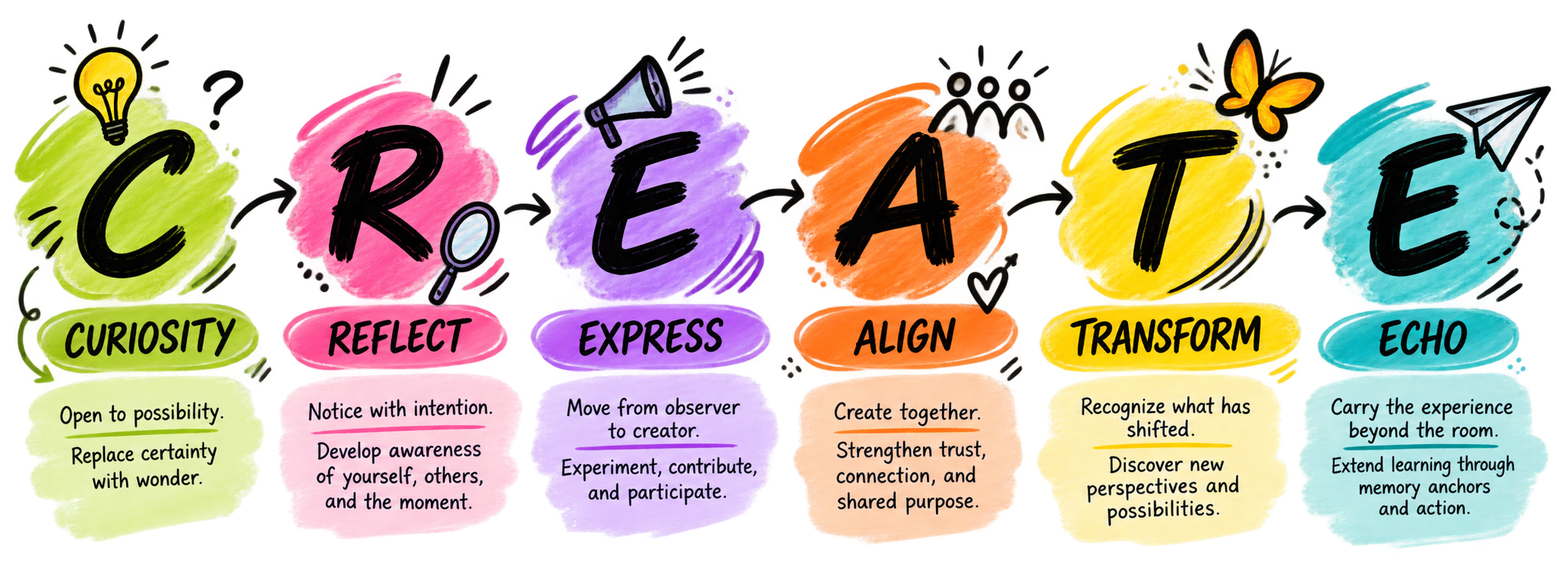
CREATE
CREATE is the philosophy underneath my work: people don’t need to identify as artists to be creative.
Creativity shows up when we notice, experiment, make a choice, respond to what’s in front of us, and allow ourselves to do something differently.
I design experiences that create room for that to happen — through play, participation, physical making, and moments that interrupt the ordinary.
CREATE and my passion for this work grew from more than a decade working at the intersection of product, experience, communication, and culture inside fast-moving technology companies—alongside my practice in art, facilitation, and community building.
CREATE
why it matters
-
Teams do their best work when people feel safe enough to contribute an unfinished idea, ask a question, disagree, experiment, or admit they don’t know.
Creative participation gives people a low-stakes place to practice exactly that: making choices without knowing the outcome, sharing something they created, responding to others, and taking small interpersonal risks.
Research informed by Amy Edmondson’s work on psychological safety.
-
Creativity isn’t reserved for artists. It’s the ability to imagine alternatives, make connections, experiment, and respond when the answer isn’t obvious.
Participatory creation moves people out of problem-solving on autopilot and into a different mode: trying, noticing, adapting, and discovering what happens next.
Informed by research on creativity, adaptability, and innovation.
-
We learn differently when we actually do something.
Rather than hearing about curiosity, collaboration, or adaptability, participants encounter those skills in real time—making choices, responding to uncertainty, working with others, and reflecting on what happened.
The experience becomes something they can feel and remember, not just something they were told.
Informed by David Kolb’s work on experiential learning.
-
Thinking doesn’t happen only in the head. Movement, sensation, environment, and physical interaction all shape how we process information and make meaning.
These experiences bring the hands and body into the process. People move, make, notice, and respond—opening different pathways for insight than conversation alone.
Informed by research on embodied cognition.
-
Attention and memory are strengthened when learning is active, novel, emotionally engaging, and participatory.
Participatory experiences intentionally interrupt the ordinary workday. The unfamiliarity of making something, the sensory experience, and the shared moment help make the learning more memorable—and easier to carry back into everyday work.
Informed by research on active learning, attention, and memory.
I’ve creaTed with:


YOU DON’T NEED TO KNOW WHAT YOU WANT TO MAKE.
Most organizations don't arrive knowing what the creative experience should be.
They come with a moment.
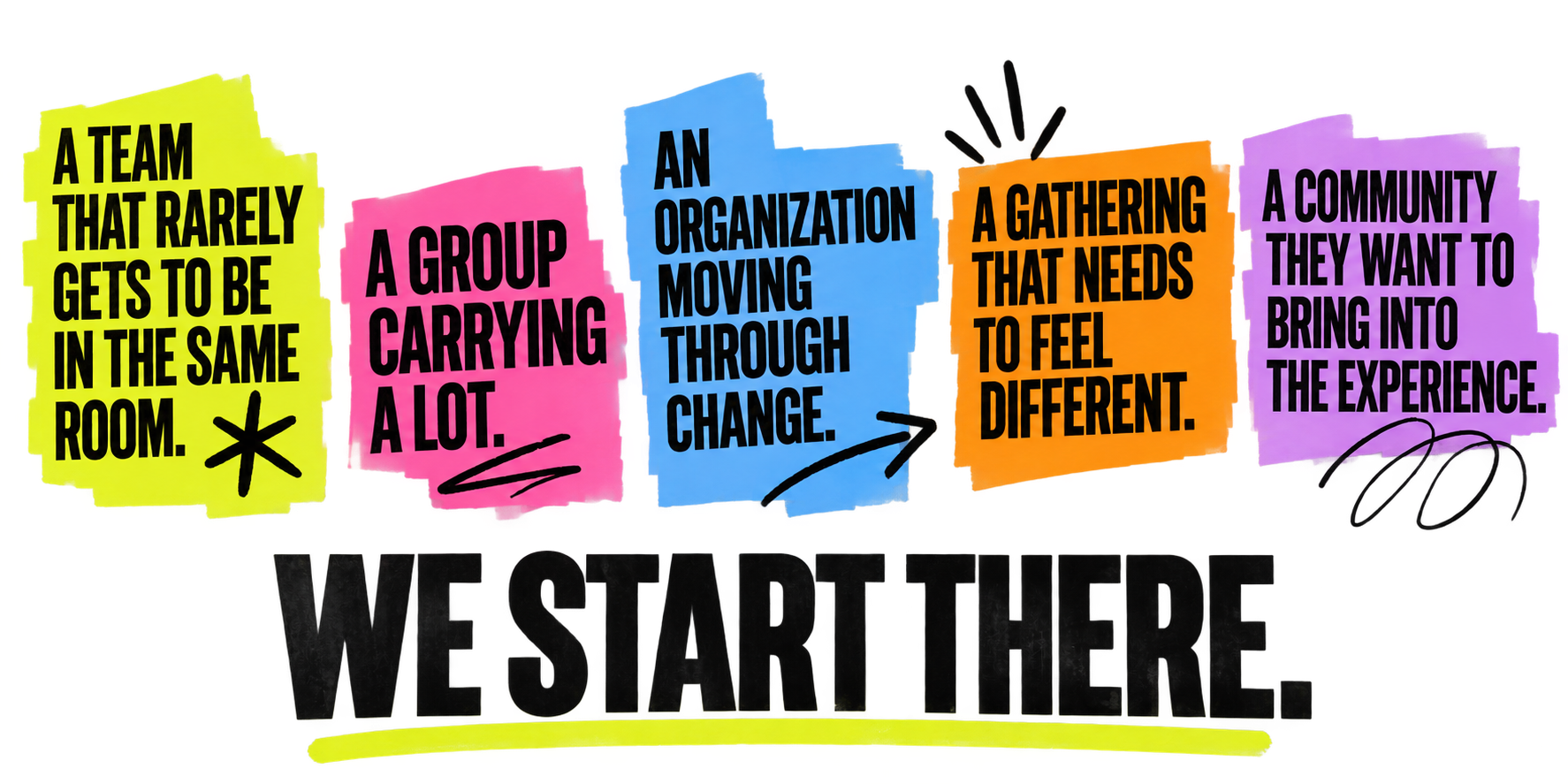
Through a focused discovery process, we get clear on who is in the room, what's happening right now, what matters, how you want people to feel when they leave, and what you want them to carry forward.
Then I design the experience around it—choosing the materials, structure, environment, and level of facilitation to support that intention.
The intention comes first.
The medium follows.
process
-
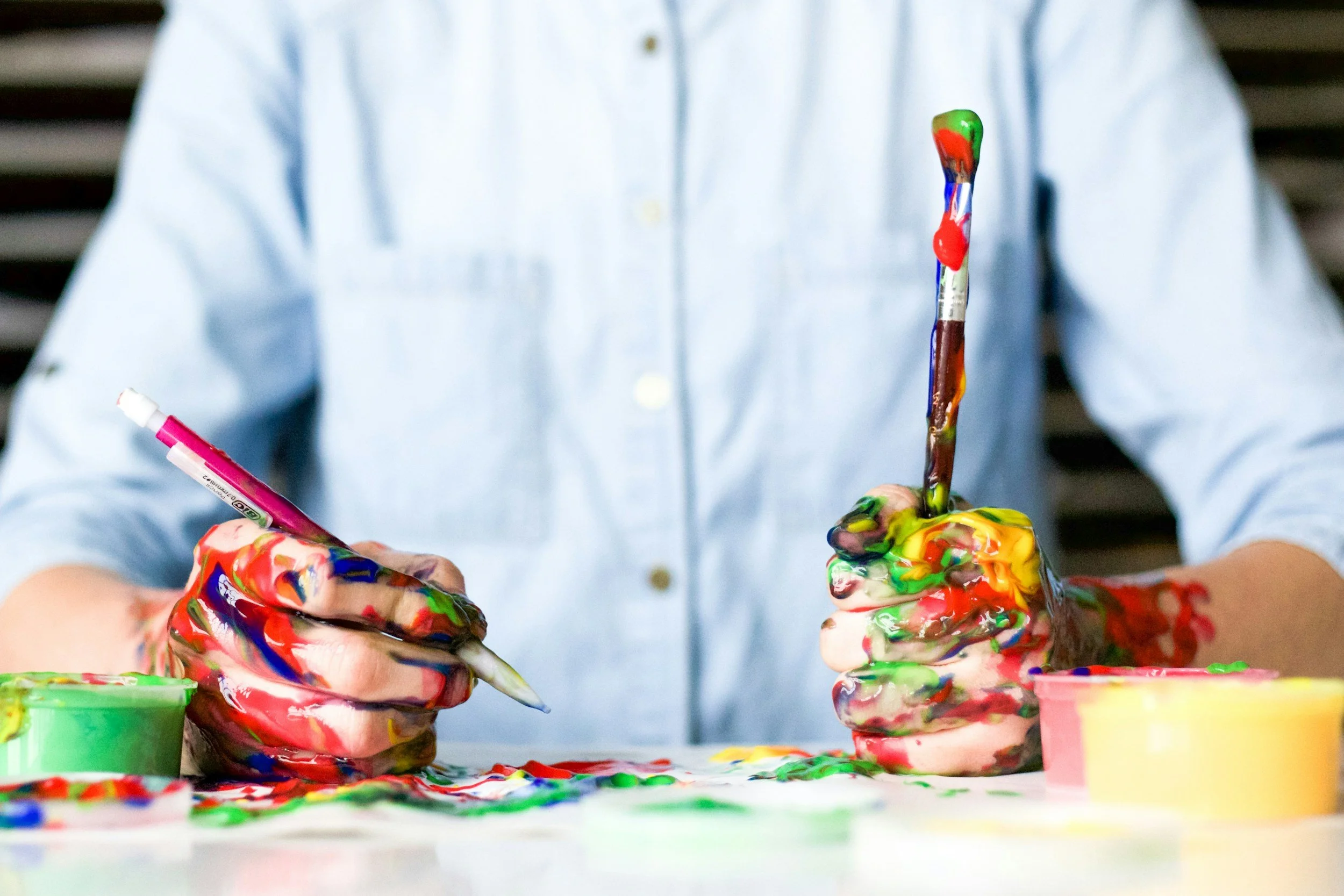
We get clear on the moment.
Who is in the room? What's happening beneath the surface? What matters? How do you want people to feel? What do you want them to remember?
-
I build the experience around the intention.
Materials, environment, structure, participation, facilitation, and form are chosen because of what we're trying to create—not because they came from a menu.
-
We step into something different.
People make, play, notice, experiment, contribute, and connect—with enough structure to hold the experience and enough room for something unexpected to happen.
-
Something leaves the room with us.
Sometimes it's an object or artwork. Sometimes it's a shared memory, new perspective, stronger connection, or a different way of seeing what's possible.
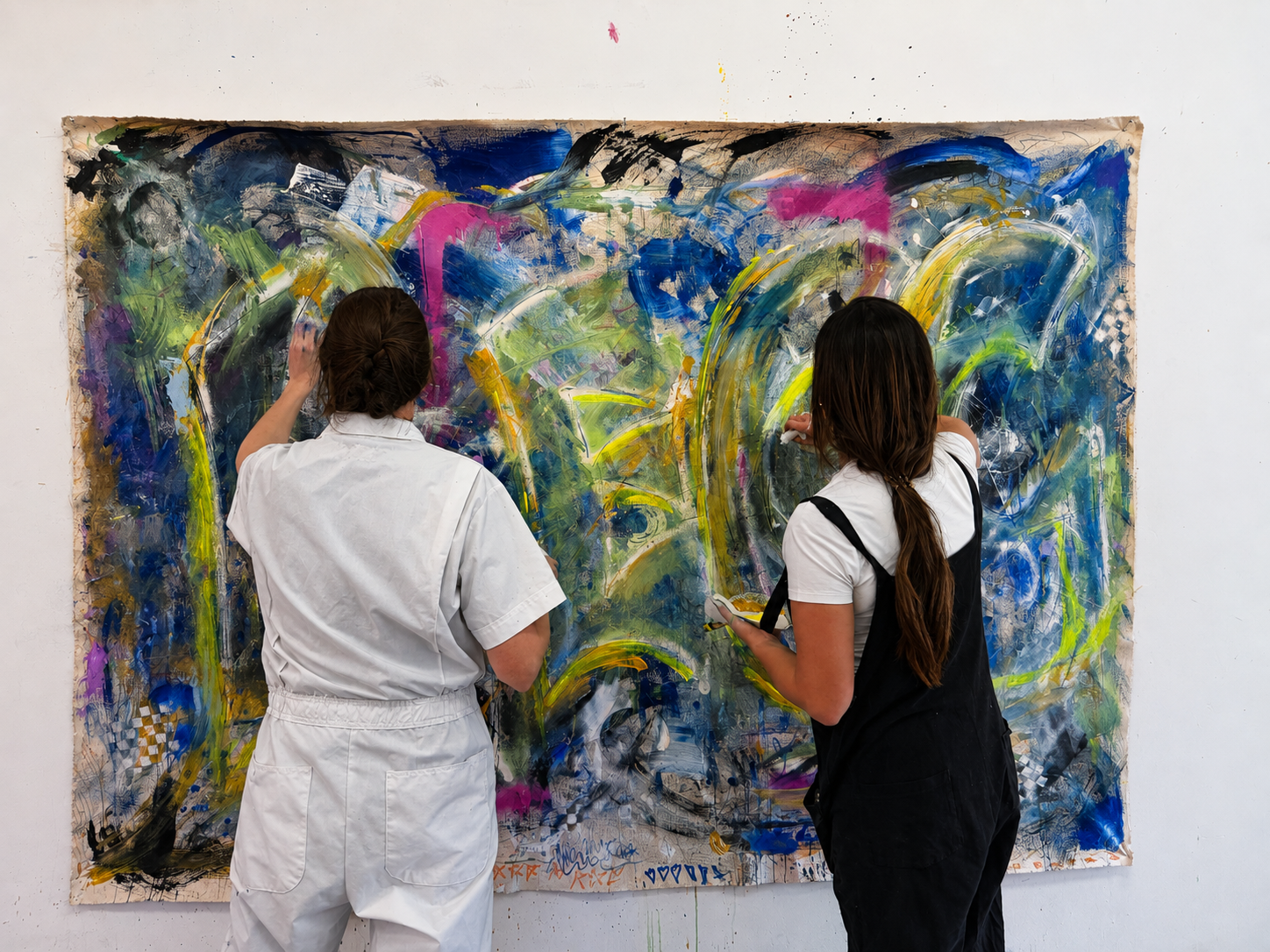
what that can look like
Different people. Different moments.
Different intentions. Different experiences.
We use some common ingredients.
The recipe is always changing.
a few stories…
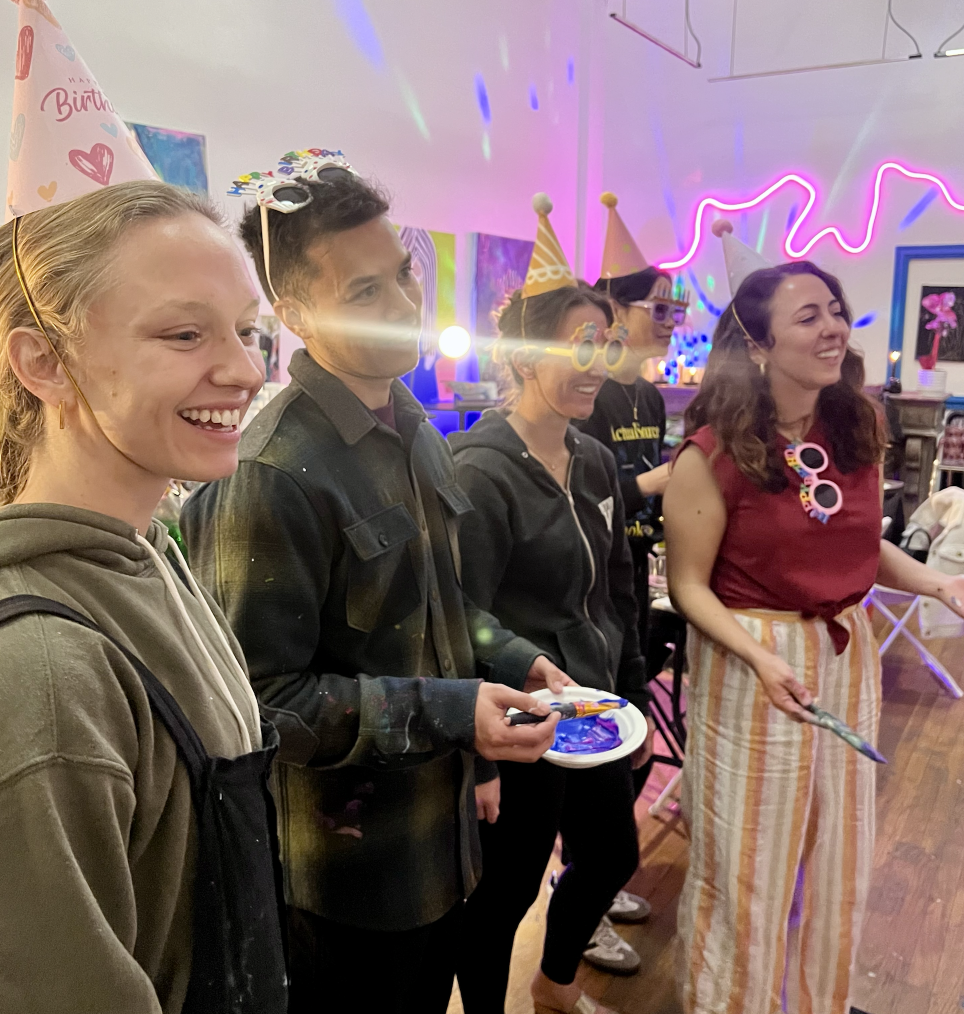
rady children’s making room for play
Pediatric Residency Program
Residents were navigating an intense training environment, long hours, and emotionally difficult work. Program leadership wanted to create intentional space for play, connection, trust, and communication.
We designed a low-stakes creative experience that invited residents out of their professional roles for a moment and into making, experimenting, and connecting differently. The result was two massive pieces of art, titled Superbloom, for their break room—plus a splatter-painted bookshelf created to house donated children’s books.
INTENTION → Play · Connection · Trust · Communication
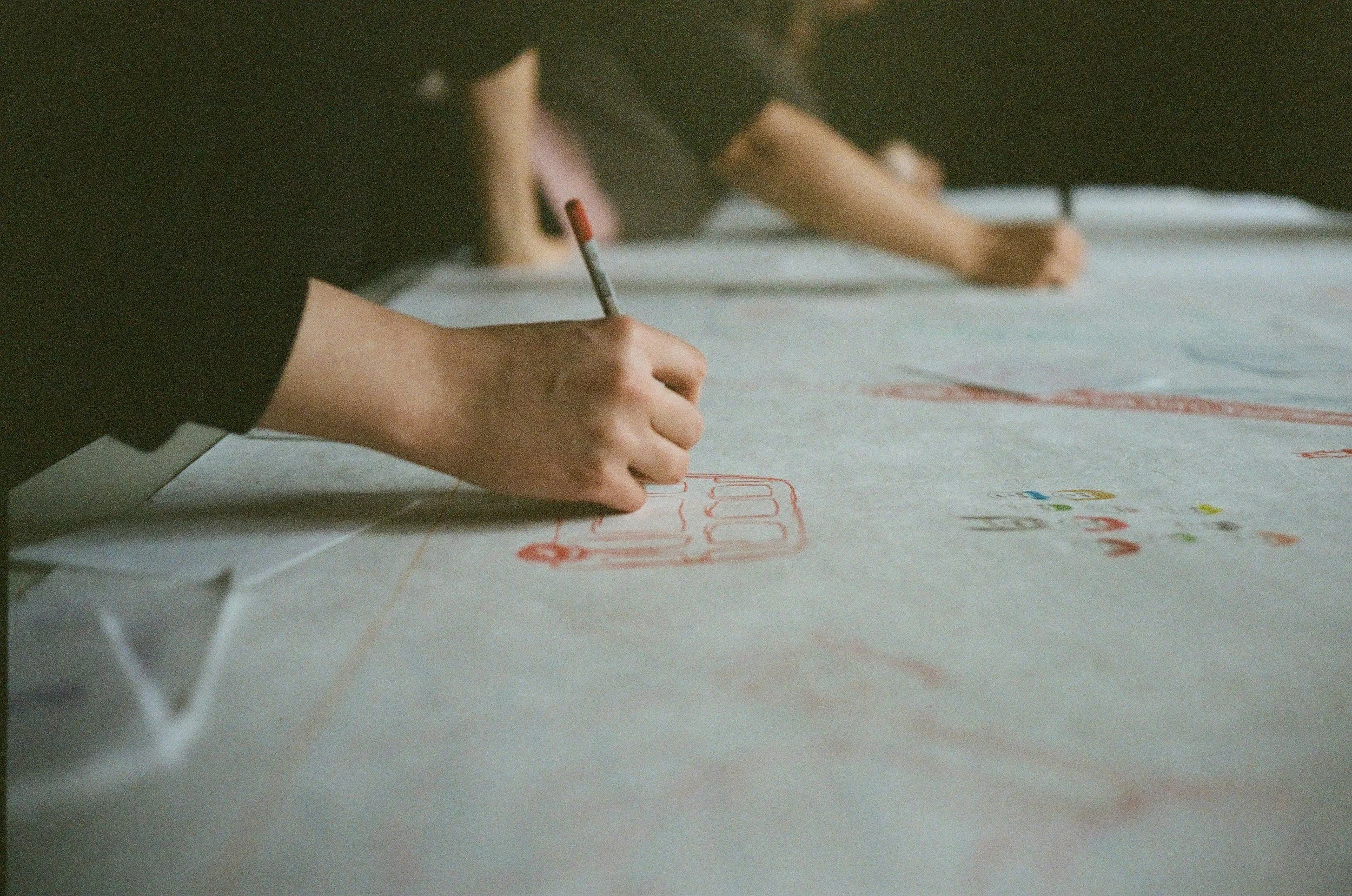
cooley making space to slow down
Employee Appreciation + Mindfulness
The experience needed to complement a week centered around employee appreciation and wellbeing—while working onsite, staying low-mess, and welcoming people moving through at different times with different comfort levels around creativity.
I designed a calm, self-directed creative experience where people could choose their own way in and participate at their own pace.
INTENTION → Presence · Autonomy · Restoration
cresset carrying connection forward
Annual Team Offsite
A geographically dispersed team had a rare opportunity to be together in person. The intention was simple: play, connect, and strengthen relationships outside the usual rhythms of work.
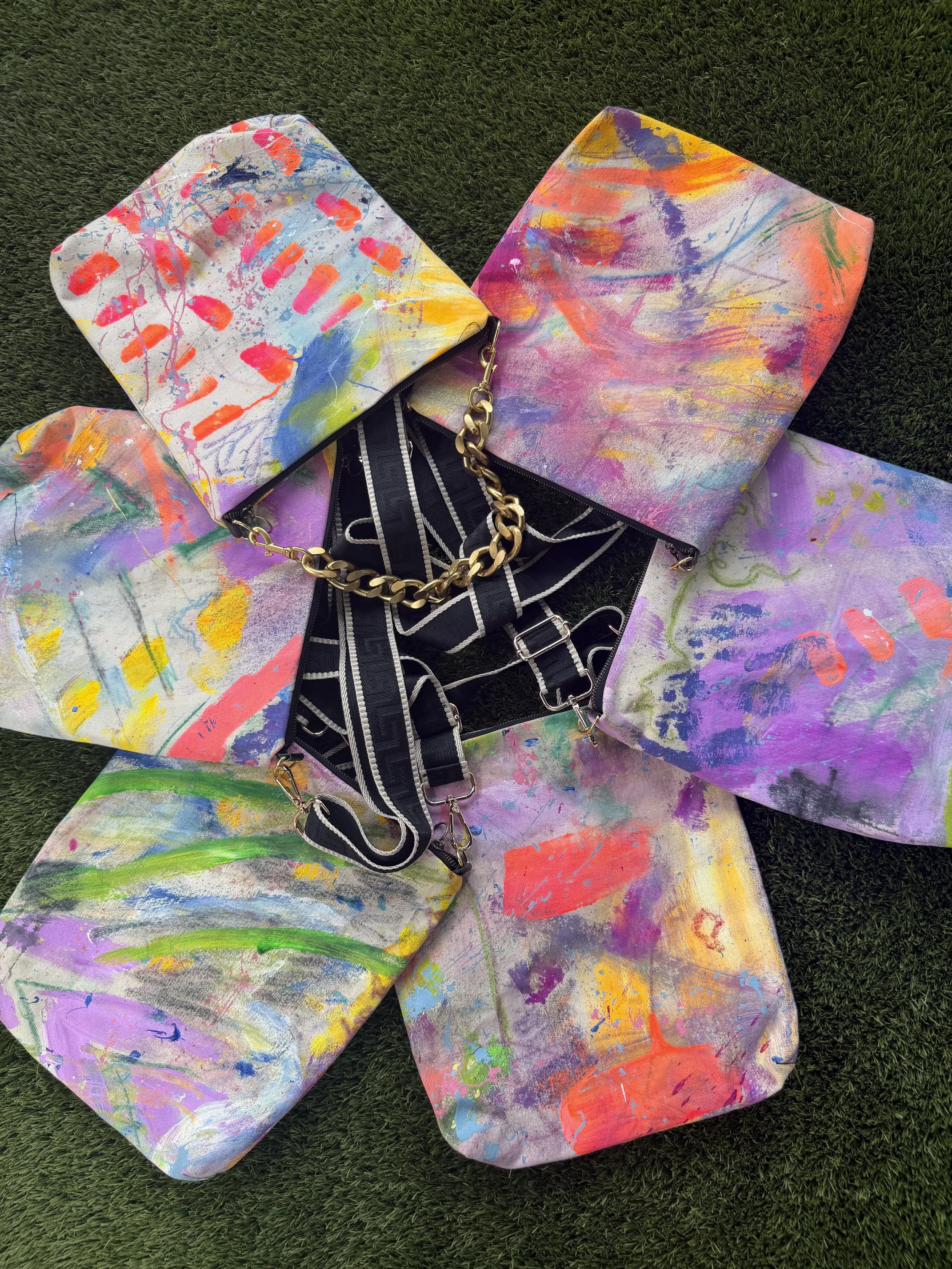
Together, they created one large collaborative canvas. Afterward, I transformed it into individual wearable totes—giving everyone a piece of what they'd made together to carry home.
INTENTION → Connection · Play · Shared Memory
san diego made turning a crown into participants
Large-Scale Public Event
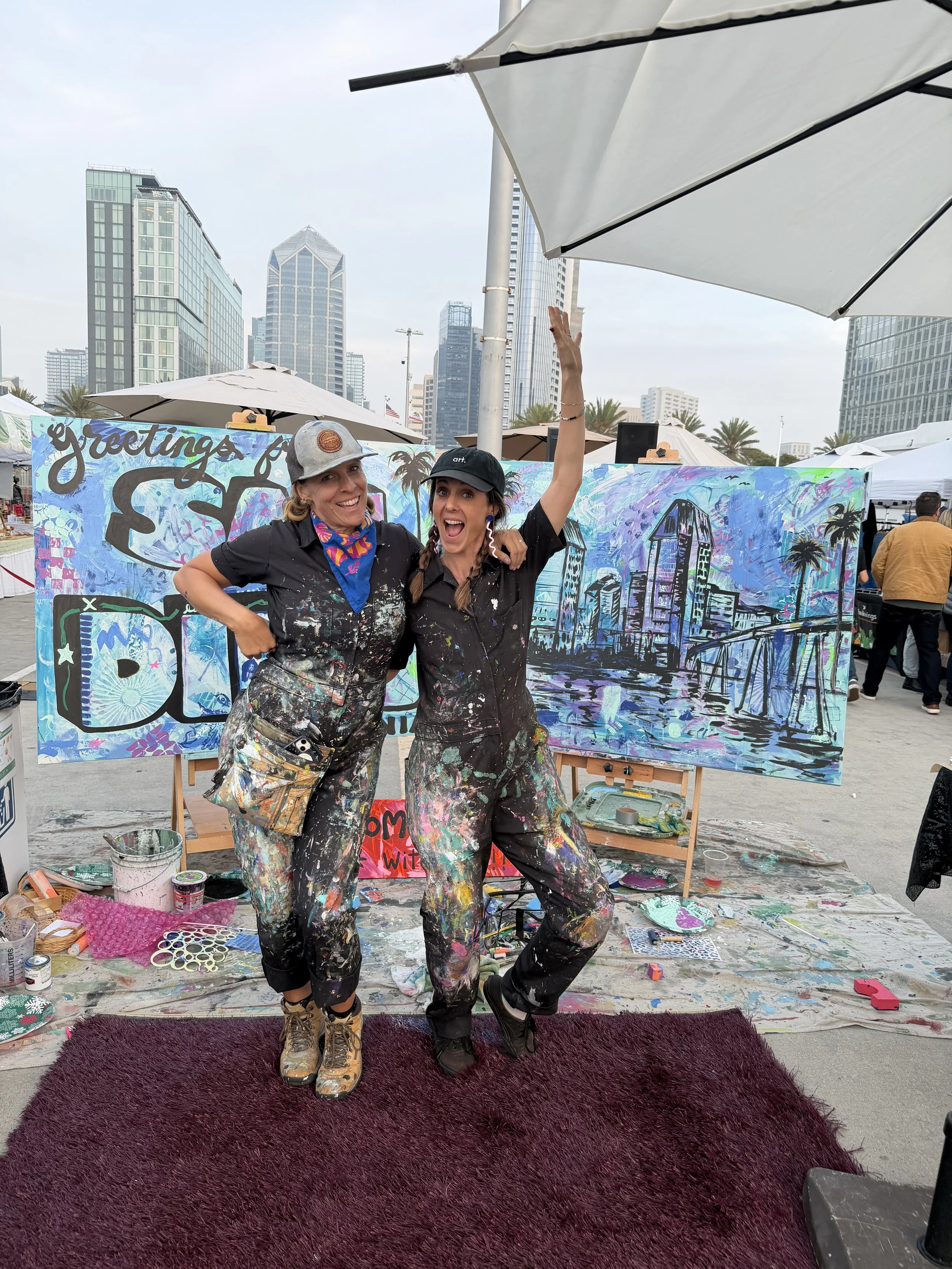
The goal was an inclusive, immersive, San Diego-specific creative experience that could harness the energy of a large holiday market.
The magical Hanna of Hannas Murals and I created an intuitive, drop-in participatory experience that allowed people to contribute quickly and collectively transform the work throughout the event.
INTENTION → Participation · Place · Collective Energy
COMMON INGREDIENTS.
ALWAYS A DIFFERENT RECIPE.
Paint. Light. Blacklight. Paper. Found materials. Objects. Movement. Reflection. Individual marks. Collective installations. Things you keep. Things that transform. Things that disappear.
The medium isn't the offering. It's one of the tools.
where Creation comes to life .
Leadership teams · Off-sites + Retreats · Conferences · Organizations in transition · Community + Education
From intimate team settings to large conference audiences, each experience is designed around the people in the room — with enough structure to hold the moment and enough room for something unexpected to happen.

About Nicole
Nicole Zappala is an artist, experience designer, facilitator, and community builder whose work sits at the intersection of creativity, culture, and human connection.
Before becoming a full-time artist, Nicole spent more than a decade in startups and tech, working across product, user experience, organizational communication, and culture. Much of that work centered on a recurring challenge: how do you keep people connected to a shared direction while the organization, product, and world around them are constantly changing?
Today, she brings that experience together with her participatory art practice to design experiences that help people practice curiosity, creativity, adaptability, connection, presence and trust—not just talk about them.